The opposition’s stand that EC cannot determine citizenship has been a common thread running through the arguments of a large number of politicians and NGOs represented by advocates Kapil Sibal, A M Singhvi, Prashant Bhushan, Shadan Farasat and Md Nizamuddin Pasha.
If it has doubts, EC can probe person’s citizenship, says SC
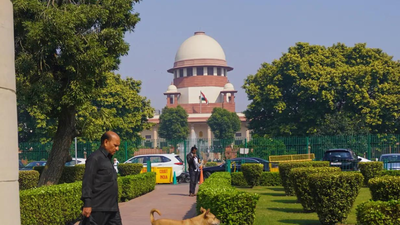
EC has no jurisdiction to engage in determination of citizenship of a voter as that is the task of govt or Foreigners Tribunal. All of them argued that according to Representation of the People Act, if a person has proof of residence and is over 18, and gives a self-declaration that he is a citizen of India, then EC has no power to inquire into citizenship and delete him from the voters’ list.On Tuesday, a bench of CJI Surya Kant and Justice Joymalya Bagchi responded, saying, “EC does not claim that it has the power to determine citizenship of a person or declare him as a foreigner. But, if it has doubts about the citizenship of a person registered as a voter or seeking inclusion of name as a voter, it can surely inquire into it.”“The first and foremost pre-condition for inclusion as a voter is that he/she must be a citizen of India. Given the constitutional and statutory powers conferred on EC, can it not undertake an inquisitorial exercise to find out who are doubtful citizens? That is included in the constitutional task of superintendence of elections,” the bench said, in what marked an endorsement of EC’s own stance on the issue.Farasat argued when a statutory procedure was provided for determination of citizenship, EC had no jurisdiction to usurp that process. SC said, “To argue that a person required only proof of residence and age for inclusion in a voter list without proof of citizenship would be a misnomer. Proof of residence and age are statutory requirements. But citizenship is a constitutional requirement.”“Take a hypothetical example of an illegal migrant residing in India for more than a decade and more than 18 years of age. Will he be counted as a citizen to be included in the voter list? To argue that citizenship is to be presumed when residential and age criteria are met will be wrong …,” it said.Farasat said, “The danger of illegal migrants getting into voters’ lists is far less compared to mass exclusion of voters in the name of identifying non-citizens.” SC said, ” Can it be said that by asking for documentary proof, it is attempting to determine citizenship of a person?”