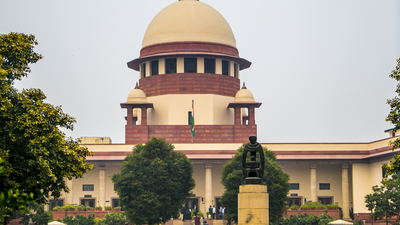

NEW DELHI: Nearly three decades after Supreme Court’s Vishaka judgment mandating a mechanism against the sexual harassment of women at workplaces, it remains unimplemented by many high courts, including Calcutta, Patna, Orissa, Kerala, Chhattisgarh, Allahabad and Uttarakhand.Appearing for PIL petitioner Geeta Rani, senior advocate Sonia Mathur told SC that, significantly, district courts in Delhi, Punjab and Haryana, too, do not have any such mechanism. The bench sought status reports from registrar generals of the defaulting HCs, and bar associations and bar councils all over the country.
‘Lack of redressal mechanism undermines women’s rights’
The petitioner told the bench of CJI Surya Kant and Justice Joymalya Bagchi that the absence of a gender-sensitised complaint-handling structure in many courts, bar associations and tribunals results in serious constitutional violations and discourages women from fully participating in the justice delivery process.“In several courts across the country, there is either no established internal redressal mechanism, or the mechanism is not duly notified, accessible or functional. Information about complaint procedures, responsible authorities, or grievance redressal channels is often unavailable or opaque,” she said. “Sensitisation and awareness among court administration, judicial staff, security personnel and lawyers also remain inadequate. This systemic deficiency exposes women to an unsafe environment and undermines their constitutional guarantees,” the petitioner said.In the Vishaka judgment in 1997, Supreme Court had laid down mandatory guidelines requiring all institutions, including courts, to establish mechanisms for prevention and redressal of sexual harassment at workplace, recognising women’s right to equality, dignity and a safe work environment under Article 14, 15 and 21 of the Constitution. In 2013, SC, in the Medha Kotwal Lele case, had reaffirmed and strengthened the Vishaka guidelines, and directed all institutions to ensure effective, independent and accessible complaint mechanisms to safeguard women’s rights at workplaces. In 2015, SC had constituted the Gender Sensitisation and Internal Complaints Committee for protection of female lawyers, employees, interns and litigants within court premises.The petitioner said, “The absence of similar mechanisms in HCs, district courts and tribunals results in unequal treatment of women lawyers across judicial Institutions and hence, violates Article 14. A constitutional standard available within SC must be replicated for every court of justice in the country.”